
Insights for creative online business
Filter posts by category, or explore all posts below.


recent gold nuggets
Quizzes. We’ve all heard of them. We’ve all taken at least one. But have you ever used a quiz for your business?
The power of quizzes is no joke. Even the experts sing the praises of a good quiz for small business growth and success.
And with amazing software in these modern days, creating a quiz is almost as easy as waving a wand. Well, that plus a little bit of creativity and planning.
So get ready because I’m about to walk you through the exact steps to follow to create a quiz that will skyrocket your email list growth and Instagram engagement.
A quiz is one of the best methods to turn Instagram followers into subscribers while you sleep—and no, I’m not talking about an Instagram sticker poll.
With Instagram’s latest updates, it’s easier than ever to share a full-fledged quiz with your audience. So hop on board today, and take advantage of this quick-growth quiz strategy to boost your brand and ensure long-term progress—instead of a plummet.

You put a lot of time into creating social media content. But with the constant changes to Instagram and the chronic algorithm shifts, Instagram growth and engagement can be a rocky road.
And for small businesses who rely on Instagram to reach their audience and make money, it can be detrimental to your income.
There’s no telling what Instagram will toss our way next, so we need to be prepared for anything.
If you’re wondering what is the best way to ensure your business doesn’t get forgotten, it’s simple:
Prioritize growing and nurturing your email subscriber list alongside Instagram.
It can take as little as 30 minutes a week to implement this incredible business strategy, so you really have nothing to lose but everything to gain.
If you’re just starting out with your newsletter list, or if you already have a steady stream of subscribers, this blog post will show you exactly how to start gaining significant traction with your email marketing list today.
This way, you’ll always be able to reach your followers—whether Instagram decides to show your content or not.

As I mentioned in my previous blog post, I refreshed some key priorities this season in my business. One of the things I’m focusing on in a greater scope is taking on more design and strategy clients. And part of that includes posting each project to my blog to share with you.
I thought it would be fun to kick-off this series with a design that’s a little extra special to me. I’m excited to share it with you because this brand and website project actually features my very first creative business and the brand that kick-started my journey as an entrepreneur: TwigBerryStudio.
While I designed the bulk of this brand years ago, and while it’s been sitting in my portfolio all this time, I recently added a few finishing touches to accommodate several new ventures within my business, so it’s the perfect time to make its debut here on the Ponder Trail blog with a full project breakdown.
The fun part about today’s post is that you’ll also get a glimpse at the creative things I’m working on when I’m not writing blog posts, designing brands and websites, or working one-on-one with my brand strategy clients. Ready for the tour?

Just like life, businesses go through different seasons. Some months are jam-packed. Some have a slower pace. Some are exciting. Some are a little less interesting.
But it’s often overlooked that we actually have so much control over this.
I’ve switched some things up inside my business over the last several months to keep it fresh and to help serve me and my clients better. Plus, these changes play into my long-term goals even more.
I thought it would be fun to share this inside look on the blog, so today I’m diving into 5 strategic areas I’m prioritizing in my business this season.
I hope these ideas offer you inspiration if you’re looking to give your small business a backstage spruce too.
A few key changes can really amp up your productivity and build more strategy into how you run things as an entrepreneur. Let me show you around…
Ever feel like something in your business is missing? Maybe you have questions about the tasks you should prioritize. Maybe you wonder if your content is reaching the right crowd. Maybe you aren’t seeing the results you wanted despite working those extra long hours on your side hustle.
Can I let you in on a little secret? All of those thoughts can find their answers in a comprehensive strategy. And if you think there’s more that your brand could be achieving, it’s time to create a solid brand strategy and put it in the driver’s seat.
Real talk. Are you missing out big time by leaving your strongest tool by the wayside? Is your brand trudging forward while your straightforward action map is right there waiting in your back pocket? Have you given your business the best shot by tapping into the life-giving world of brand strategy?
It’s possible that you’ve tried strategy before, or perhaps you haven’t given it much notice, but if you aren’t getting the results you want in your business, I guarantee you that a lack of strategy is to blame.
So can you guess what today’s article is about? That’s right: brand strategy for creative entrepreneurs.

Over the last several years, I’ve had clients come to me with business strategy questions despite them being enrolled a coaching program.
What tasks should I work on? Where should my focus be? What’s the fastest way to grow an audience? How do I create a marketing plan that works? How do I follow these ideas in a way that sets my brand apart? I have a limited amount of time each week, what strategies are most important for my goals? I’m posting consistently to my social media, but I’m still not getting any traction; what am I missing?
Clearly, something was missing in the instruction they were getting.
While they were getting standard business advice, creative entrepreneurs were often left wondering how to tie it into their own unique business and how to keep their brand consistent.
So I designed my coaching program to help small business owners take their businesses places without all the guesswork. Instead of vague business coaching, I decided to offer something vastly more helpful: one-on-one custom-tailored brand strategy coaching.
I created this service to help creative entrepreneurs work through the hurdles of running a business. There are so many ways to get stuck along the way, and it can feel like a lonely journey at times with new questions rising daily. Let’s take a look.

Do you know what’s the most valuable asset to get you from point A to point X-marks-the-spot where your goals are? An effective and easy-to-execute plan.
A strategic plan is the difference between sitting at your computer with a blank stare trying to figure out what to work on today vs. jumping into action each day to conquer effective to-do’s that make progress.
Most people agree that planning is important. But many people also recognize that planning can be a pitfall. Like with any task or method, there’s often a best and a not-so-great way to do something. And planning is no exception.
When it comes to planning, there are countless ways to get hung up. From not knowing how to create a plan, to staying in a planning stage for too long, to not being able to follow through on a quality plan.
As creative business owners, we have a lot on our plate. New ideas and opportunities seem to flood our notebooks and calendars, overwhelm sometimes knocks on our office doors, and at least a few of last month’s tasks are looking for a place to fit into our busy schedule. In fact, entrepreneurship brings so many hats that we either try to stack them in order of priority or shrink them to wear multiples ones at the same time.
With everything going on, our original dreams and goals can feel out of reach all too often. Like a distant memory, our long-term goals get buried, and our short-term goals feel impossible to work towards.
Thankfully, there’s a solution. And a simple one at that.
It’s called an effective plan. And if you’ve tried planning before with less-than-desired results, I’ve got you covered. This month in the Brand Strategy Treehouse, I’m going to show you how to turn those efforts into an easy-to-follow plan that takes your business places—rather than one that runs you ragged and yields no progress.
With videos, guides, and workbooks to walk you through each step, you’ll come away with a fresh perspective and a new approach to planning.
the complete treasure trove

Last month, I published a post all about Squarespace’s new, long-awaited feature that allows you to create a built-in membership area on your website. It’s called Member Areas, and in my recent blog post, I mentioned how I was using it to build and house the latest addition to Ponder Trail: Treehouse: a brand strategy subscription.
I wanted to create a service that was chalk-full of content and value each month. I structured it to include written and video components to provide education and support, while also including downloads such as graphics, photos, and templates that creative entrepreneurs could use as helpful tools for their businesses.
Rather than being a simple library or gallery of downloads, my new membership area is made up of actionable weekly lessons, with an all-new topic each month. My goal was to create a format that feels part-course and part-service, all while having a self-paced approach for each 30-day span.
I also included a live webinar component so I can answer members’ questions directly and help them work through each step of our current topic.
If you’re looking to create a membership website using Squarespace, this is the post for you. Because today, I’m going to walk you through my exact step-by-step process for how I created my new members-only area on my site.
I’m unpacking my entire method, and I wanted to make it easy for you to work through, so I’ve decided to break it down into a 4-part series.
Today’s step is focused on the planning phase where I’m sharing my strategy and approach for how I came up with my subscription service idea.
In this post, I’m sharing how I created a plan for my signature membership, how I mapped out the details, and how I determined what it would include.
Here’s what I did:
When overwhelm starts to show it’s ugly head, it’s time to take action and stop it in its tracks.
If you’re feeling overwhelmed, it might be a sign that something isn’t quite right.
Sometimes it can be out of our control, but often times, it’s tied to how we are approaching our business and managing things. If you’ve been spinning your wheels or find yourself stuck in a cycle of trying-and-failing, it’s time to take control.
Overwhelm can quickly lead to burnout if it hasn’t already.
But not to worry, I have your back with some tried-and-true strategies.
Try these tricks to put overwhelm at bay.
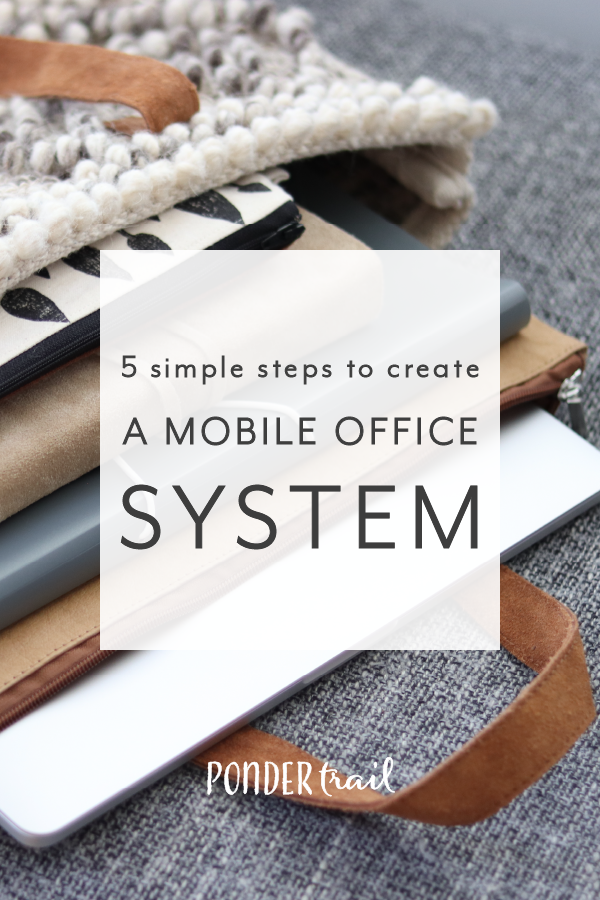
We’re all spending more hours working in our houses these days.
But it isn’t always possible to dedicate a space in your home for your business. Sometimes a work area looks like a the kitchen counter, coffee table, or couch, and with a little creativity, your home probably has a few great places to hunker down and get work done.
The goal of any workspace is to be a productive setting to get work done. And when we’re hustling hard or working on a project, it’s usually best practice to create some sort of setup to help your work sessions be efficient.
But when you don’t have an office or a desk, you might not want to leave your stuff set up round the clock.
The key is finding the right balance. You want your workspace to be quick to set up and easy to tear down. Otherwise, the process takes time away from your day and creates a hundred extra steps between you and getting to work.
What’s the solution? You need a mobile office system.
This summer, I came up with a simple way to pack up my office to work productively from anywhere.
My friend and fellow creative, Caitlynn, requested this blog post, so I made it a little extra special by including lots of images. In fact, I did a photoshoot so I could show you exactly what I use. I hope you enjoy the tutorial!
Over the past few years, I’ve discovered the value of adopting a laser-focused mindset. It creates clarity and an open runway to brainstorm and bring your ideas to life. It gives you space to think strategically, create a plan, and stay on track. It cultivates productivity, action, and progress like nothing else.
Once I switched my approach and dedicated my attention to one part of my strategy, I started saving time, seeing more progress, and finally getting in the groove. And I haven’t looked back since.
I started seeing the difference it made in my business first-hand, so I set out to help other creatives do the same. And after coaching brand strategy clients one-on-one for over a year, I wanted to find a way to help even more creatives.
So I landed on the perfect idea: a self-paced membership program. It’s a brand strategy subscription that’s part-course, part-service, and part-library, so it meets the best of all worlds for entrepreneurs who are looking to take action in their businesses.
I’m calling it the Brand Strategy Treehouse.
It’s my all-new signature membership, and it’s available to you today!

As we approach the new year, we start to plan and dream about where we can take our business in 2021. At the top of that list for many creative entrepreneurs is growing our Instagram accounts.
With all of the users on Instagram, most brands have thousands of potential clients and customers hanging out on the social media platform. But it seems to become ever more difficult to grow our accounts due to industry saturation, algorithms, and just plain overwhelm.
Despite the odds, we sometimes discover new accounts who are surging with popularity.
How are they getting so much traction? What are they doing to gain followers so easily? How are they completely sold out after each product launch or shop update? What magic beans do they have that my brand is missing out on? There must be strategies they follow.
Can you relate to some of these questions and thoughts?
Well, today, I’m sharing the best methods for growing quickly and authentically on Instagram. They’re the simple techniques that all thriving accounts utilize, and I can’t wait to spill the beans with you in this blog post!
P.S. I’m hosting an Instagram Challenge starting January 4th. Sign up to grow your account and reach your Instagram goals in 2021.
Squarespace is hands-down my favorite website provider for small businesses, bloggers, and content creators alike.
And it just got better.
If you’ve ever thought about creating a password protected area on your website or envisioned what a members-only area could do for your brand, then it’s the perfect time ever to take action. Why now?
Because Squarespace just rolled out its latest feature: Member Areas.

Instagram has been one of the best tools for small business owners for over five years. And while the features keep getting bigger and better, many creators find that their engagement is declining. When Instagram introduced their non-chronological algorithm several years ago, it caused many brands to lose their reach and become out-of-touch with their audience.
Instagram has amazing benefits, though it can be an overwhelming or dreaded task if you aren’t seeing results. It can be a lot of work to get the ball rolling and to keep the momentum going if you don’t have a simple strategy in place.
So the last thing a creative entrepreneur wants to do is lose all of that hard work by making the algorithm—or their audience—unhappy.
That’s what this January challenge is all about: how to grow a loyal and engaged audience on Instagram and how to keep the platform happy—all without using up hours of your day.

I am so excited to launch my new social media planner for Instagram. I’ve been working on it for quite some time. I wanted a straightforward tool that would . . .
help with staying on track with Instagram goals
take the guesswork out of posting
make connections that help build a profitable account
grow an audience without frustration
create a clear step-by-step routine with daily actions
save hours and hours each week
Enter the planner!

If I could only give you one tip for growing your business, it would be to show up consistently. Throughout the years of entrepreneurship, I have been convinced more and more that one of the top keys to growth is to simply show up for your audience each day.
Consistency gives you a steady stream of value to share, it demonstrates your expertise, and it shows that you truly care about your followers, thus building a trustworthy brand.
It sounds simple enough, but it isn’t always easy to show up every day. In fact, it’s quite difficult at times. And with all of the behind-the-scenes work that goes into running an online business, it can be easy to prioritize the front-end of your brand—especially for those of us who are on the introverted side of things. (Can anyone else relate?)
However, the audiences have voted, and it’s confirmed that you can’t grow a business without showing up consistently.
So today, I’ve narrowed down 3 easy ways to revolutionize your consistency. These simple things will help you get rid of the road blocks and keep you ahead of the game so you can show up each day and build a loyal and engaged audience.
During the hiatus I took this spring, I spent some time brainstorming new content ideas for the rest of the year.
And today, I’m excited to introduce the latest resource to Ponder Trail: videos!
I wanted to try switching up the format for how I give tips for creative business and brand strategy, and what better way to share it that with video?
I will be uploading to the blog and my YouTube channel twice a week, on Wednesdays and Fridays. Each time I upload a video, I will add it as a new blog post with all of the info mentioned in the video.
Since I love talking about productivity and working from home, I figured it would be the perfect video to start with. I hope you enjoy!
The ultimate goal of productivity is to get rid of busyness and replace it with efficiency, effectiveness, and progress.
As creative business owners, hustling often works its way into our lifestyle. We have so many ideas and things to do. But sometimes that mentality pulls in too many things that aren’t actually helpful or productive in the long run. On the outside, it can look like we’re getting lots done, while in reality, we’re running around in circles.
Don’t simply add to your hustle for the sake of feeling busy. Instead, you want to see progress from the time you put into your business, and you want your time to have a big impact. True productivity looks like speeding along the process of reaching your goals or helping you stay on track.
Here’s how:

While many creative entrepreneurs have already been working from home, in recent months, people around the globe have faced strict social restrictions and isolation orders. This has taken away the much-needed work days at coffee shops that entrepreneurs often rely on to stay productive and to get out of the house throughout the week.
With productivity in jeopardy from being stuck at home for months on end, it's easy to slow down, get behind, or take days off unintentionally—simply because your drive to work has dwindled. But when starting, running, or scaling your own business, it's critical to keep working and getting things done.
So what is an entrepreneur to do when their livelihood is tottering at the top of a mountain along with their close-to-plummeting motivation?
You've got to push through and boost your productivity so you can get tasks done!
So here are 11 of my favorite work-from-home essentials to stay motivated and get back into the groove.

When you run your own business, it’s easy to leave your day open and unstructured because you can, right? But it’s also easy for that openness to become filled with nothingness.
And that’s where a schedule comes in to save the day. Structure is a key part in a productive day, and I’m here to share one of my favorite methods of organizing my time as a creative business owner.
It’s called time blocking, and it is why I’m sitting here today writing this blog post to help you on your entrepreneurial journey. Because without this system, my productivity would have flatlined a long time ago.
If you’re hoping to schedule your workweek and start being productive, this post is for you! (Plus, I’ve included a copy of my free goal-planning workbook, complete with a few pages dedicated to helping you schedule your week.)
Imagine gaining back hours each month without delegating, cutting back, or automating your tasks. It’s like free time that’s yours for the taking.
This not-so-secret weapon is a strategy that all creative entrepreneurs have at their disposal, and it’s called batching.
It’s the king of task management, yet this effective trick is so simple you can master it in 3 easy steps. If you try it out, I guarantee you’ll benefit from this approach to getting things done.
Learn how in today’s post, and start saving time so you can focus on the projects you’ve been wanting to work on.

Working from home is a huge blessing that comes with having my own business. And while most of the time it’s amazing, it does pose its own challenges.
Common struggles among creative entrepreneurs living the work-from-home life often include managing time, limiting distractions, and avoiding the dreaded cooped up feeling.
Over the course of five years of working primarily from home, I’ve tried countless methods to overcome these hangups—and boy did they plague me when I was first starting out.
After all of the trial-and-error, I’ve honed in on the top strategies that made running an online business from home a magical experience.
So here are 11 simple practices I follow to help me stay productive each day.
Setting and reaching a goal consists of 3 main stages:
the part that depends on your time, resources, and tools
the part that relies on your know-how and abilities
the part that counts on you doing the work
These areas each create their own hurdles around achieving goals. Over the years, I’ve struggled with all three of the hang-ups above, and today I’m sharing my best insights on how to overcome them.
With goals, we either tend to overaim with excitement or under-aim with overwhelm. Both often result in feeling stuck. But instead, we need to find the right balance to bust through roadblocks like these.
Good news is, goals are infinitely easier to set and achieve with you are equipped with the right tools in your pocket.
If you are struggling to start or grow your creative business, don’t extinguish your dreams before you have a good run! Give it your best shot with the tips in today’s blog post.

Are you making headway on your goals? Are you staying on track? Or do you often find yourself missing the mark and rewriting the same goals at the top of next month’s planner pages . . . again?
In my last post, I talked about the simple missing link to reaching goals, and I explained why many goals always seem to get away from us or feel out of reach.
Today, I’m showing you how to apply that secret so you can finally break the cycle of pushing your goals into the future.
If you tend to rewrite the same to-do list week after week, these 4 simple steps will help you understand and overcome the common struggle that many creative entrepreneurs face: how to actually reach goals.
Goals.
We set them. We plan them. We reach them, too.
Or at least, we hope we do.
Some goals propel our business forward and help us reach new grounds, while others are critical for simply keeping our business above the water.
There’s something thrilling about reaching a goal—especially after working hard for it day after day. The feeling you get when you finally check one off of your list creates a strong sense of accomplishment and a surge of motivation.
But it can be quite discouraging when you find yourself transferring the same unmet goal over to next month’s planner pages, time and time again, to no avail.
“Maybe next month will be different. Maybe I’ll finally check that one off,” we hope, once again.
But when we are stuck in a cycle and struggle to reach our goals, it’s time to try a different approach.
Last January, while thinking deeply on this subject, I had an epiphany. I figured out the secret to reaching goals—or at least the key I had been missing for years.
I realized there were actually two distinct types of goals, and I was completely missing the mindset behind one of them.
It completely transformed the way I think of goals, how I set them, and how I map them out as a creative entrepreneur.
This blog post sheds light on that secret, and I can’t wait to share it with you!

The ability to connect with your clients can make your business succeed or fail. Not only is that connection necessary for booking clients in the first place, but it's also critical to creating a quality experience for them.
When building your offerings and packages, focus on creating an unforgettable service that your clients (or customers) will look back on and talk fondly about for years to come.
My friend Sarah demonstrates this so well. She is a couples and wedding photographer with a talent for making her clients feel like well-loved friends. Her personal touch in all aspects of her brand allow her couples to love each step of the process, too.
So I'm thrilled to have her join me for this week’s entrepreneur highlight!

While your logo is one of many brand elements that make up the visuals of your brand, it has the notable ability to give people the gist of your business.
With just one mark, you have the opportunity to showcase facets of your company that go deeper than just your business name. This is a very powerful assignment.
A compelling logo grabs your audience’s attention, draws them in, and makes it easier for people to remember your brand.
It’s your business’s signature. Your X on the dotted line. And a logo designed with great intention and strategy reflects the care you give to each of your customers and clients.
While this is an area of your brand that can be creative, there are a few helpful guidelines to follow when it comes to an effective and quintessential logo.

What do you love most about a good workspace? For many creative entrepreneurs, it’s natural light, a clutter-free feel, a lack of distractions, and cozy, comfy vibes. These all work together to create an inspirational space that allows us to work productively on our businesses.
Whether you have an entire office at your disposal or a tiny corner in your living room, today I’m sharing 10 simple steps for creating an enjoyable workspace—no matter your setup.
If you want your work zone to feel like a productive retreat you get to return to each day, let this blog post be your guide.
In 2019 and beyond, every creative business can benefit from a website, and most already have one set up. However, there are many things that can make a site subpar.
You don’t want your website to be one of the many that fall prey to these rookie mistakes.
Even the smallest error can result in the largest loss—such as deterring potential clients or customers because of a site’s faux pas that’s easily fixed.
I’ve rounded up the most common website errors I’ve spotted in 2019 right here in this post. Give your business an advantage by avoiding these top 11 mishaps.

You’ve seen it before: an amazing brand design that is perfect in every way.
From the logo, to the color scheme, to how well the concept fits the business’s theme, a stunning brand like this can have you spending hours eyeing everything their shop has to offer.
This is much more powerful than a brand that lacks this alluring feel.
Why is this the case? A well-designed brand creates an entire experience around a business. So it’s no longer just a product or a service or a blog and is instead transformed into a captivating aura that draws people in.
Instantly, items in the shop become a little shinier and more special. Services become more desirable and engaging. Therefore, a well-designed brand increases the entire value of a business and makes its audience more eager to invest money into whatever the brand is offering.
This can be your business, too!
Many careful decisions go into developing successful branding; it’s the result of a design strategy and process that hits all the marks. Much brainstorming and planning is required to elevate your brand in this way, as well as techniques and know-how.
In short, with a brand like this, there’s more than meets the eye.
But I’m spilling some designer secrets today to help you make sure your brand creates an irresistible experience that draws in customers and clients.
Have you ever wanted to create a responsive gallery to feature different collections of your work all within one page?
While Squarespace doesn’t have a content block to create this magic, I do have handy trick I’ve used in various ways across my website. This method actually uses several pages, and the results are so similar to a one-page feel that your audience will hardly realize it while your responsive gallery changes with a click of a button right before their eyes.
On this “one page,” your audience can select different categories to view. And they can easily toggle between these filtered views without losing their bearings or ever having to click the <— Back button of their browser.
Similar to a storefront with categories listed at the top for easy sorting, this Squarespace work-around has many uses.
Let’s jump right into today’s step-by-step tutorial!
video + blog post
In this Ponderstream episode, learn the basics of Squarespace as I take you behind my computer screen and give you a step-by-step tour of the back end.
Get a detailed glimpse of Squarespace’s many features to see how simple and easy it is to use.
From creating pages to setting up shop, I cover practical ways creative entrepreneurs and bloggers can use Squarespace to build their brand’s headquarters.
Missed joining this one live? Register for next week’s Ponderstream webinar here.

My love for graphic design and creative entrepreneurship is what led me to venture out and start Ponder Trail. I wanted to offer branding for small businesses and be a valuable resource, too.
While I have a page dedicated to my design service, I haven't yet spelled out the process on my blog.
So today, I’m sharing the details of my brand and website design package.
There are several features that make it a little different, and this post walks you through the process and highlights some of the elements that make it unique.
I hope you enjoy this in-depth look at what it’s like to work with me to transform the visual brand identity of your business.
video + blog post
In my last Ponderstream Episode, I shared my step-by-step process for how I reach my goals. My process includes creating goals, breaking them down into daily actions, and monitoring your progress along the way.
Over the past year, I’ve focused on creating an effective and streamlined goal-planning system that saves time. Setting goals can be an easy place to get hung up on, so I wanted to outline a specific method that I could follow over and over again.
My goal was to be able to incorporate a step-by-step planning system into my routine to eliminate the pitfall of wondering where to start each day or what to work on next.
After over a year of experimenting and refining, I’ve ended up with a simple goal-planning process and created a workbook to go along with it. It’s made such a difference with reaching my goals, so I was excited to share it with you all last week in my livestream.
Essentially, my method for reaching goals is breaking them down all the way into simple to-do tasks that are assigned to each day. This creates a step-by-step plan for staying on track so you can monitor your progress and actually complete the tasks necessary to accomplish your goals.
There are 4 main sections: prepwork and laying the foundation, setting goals, planning them out, and following through. Join me as I walk you through the entire process in detail.
Missed joining this one live? Register for next week’s Ponderstream webinar here.

video + blog post
There’s so much noise online about what you need to do before you launch a business, but today I’m taking the stand and saying there’s a Top 2.
In fact, if I had known and followed them before I ventured out and launched my first business (a handmade knitwear company), these two strategies alone would have saved me from running around in time-wasting circles, and my business would have taken off much faster.
One of them is a fundamental, yet often unnoted step to ensuring your business doesn't dwindle away from you and fail due to a simple overlook.
The other is a new, growing need I’ve noticed in recent months and is a byproduct of the modern online business era. But I’m not sure how a business can survive in 2019 and onward without implementing this strategy.
While extremely effective, the are both simple methods to follow and only require a bit of creative brainstorming time with you, paper, and a pen.
So here’s what I would say if I could tell every creative entrepreneur only 2 things I wish I did when starting and growing a business . . .
Missed joining this one live? Register for next week’s Ponderstream webinar here.

If you’ve spent time browsing my blog archives, you know I love talking about creative entrepreneurship, and I jump at every opportunity I get.
So I am excited to announce my newest resource: Ponderstream!
Each week, I am hosting a live webinar show filled with high-quality content to help you in your business endeavors. I wanted to create this new form of content to transparently share even more insights and strategies with you. I love how easy and enjoyable it is to learn with video, and I can’t wait for you to see what’s in store.
Think of Ponderstream as a video podcast series that you can return to each week for new content, all designed specifically for creative entrepreneurs.
And the best part is, it’s an interactive livestream!
Ponderstream features the in-person feel of live video and a chat feature. So you can take part in the episode, too, by asking questions you have about each week’s topic.
With time dedicated to Q+A towards the end of each livestream, you can come away with personalized tips and ideas for your business each week. (Almost like a mini coaching session.)
I hope to see you there!

By now, you’ve probably heard it: a brand is more than just a logo.
As a brand identity designer, I know this first-hand and talk about it often on the blog. A business’s branding is created from building color palettes, pairing fonts, and through compiling an entire style guide—just to mention a few of the visual elements.
However, branding goes even deeper than what the outside of a business looks like. And many of these other critical areas are often neglected and in much disarray.
Branding is more of an abstract concept—like developing a writing style; it’s something that takes quite a bit of unpacking to understand fully because there are so many components and the possibilities are endless.
So I’ve broken the essentials of creating a brand into 4 simple parts to make it easy to digest and implement in any creative business.
Learn the ins and outs of these 4 key elements of branding in today’s crash course.

These days, branding gets a lot of buzz. However, I still come across many businesses that just don’t seem to grasp the full concept of branding.
I suspect this is the case because branding is a bit difficult to master. It’s an abstract concept made up of many parts and often looks different for every creative company.
But the truth is, branding will either drag your business down or allow it to soar.
So it’s paramount for every entrepreneur to set aside time to delve into forming and refining their brand identity.
Maybe you’re new to learning about branding, or maybe you’ve already covered some bases. Either way, I’m spelling out the nitty gritty of this critical notion to make it easy to understand.
As a brand designer, this is one of my favorite topics to talk about, so I hope you glean some helpful insights from today’s post on branding basics!

Turns out, when I don’t have a schedule to follow, time leaks through my day like a siv.
. . . And I have a hunch I’m not the only one.
When I first began working on Ponder Trail, my mornings started at the early hour of 4:30am. I’d wake up and hit the ground running after my husband headed to work. Those morning hours were golden for being productive and making progress. And it was easy to spend 12 hours getting things done and getting my little company up and running.
Since then, though, our schedule has changed quite a bit.
After shifting to a later, and somewhat unconventional, schedule, it took a while to figure out a routine that was optimal for running my business. It often felt like I couldn’t get anything done or stay focused.
But I took it as a creative challenge, and over the last few months, I’ve been extra determined to create a daily routine that optimizes productivity and is easy to follow.
I’m happy to report that experimentation and persistency were just the ticket: after much determination, time-tracking, and habit-building, I landed on a new daily routine and work schedule that exponents productivity! In fact, it’s been my most effective work schedule to date.
I’ve been fine-tuning it ever since, and today, I’m taking you behind the scenes to see what a typical day of working on Ponder Trail looks like.
Keep reading for a tour of my routine and how I schedule my time.

You’ve probably heard it before: people want more than pretty pictures on Instagram; they want authenticity and someone to connect with. In other words, people are seeking to get to know you on a more personal level.
So joining me for this week’s Entrepreneur Highlight is Lauren of Found and Free. She’s sharing lots of wisdom and inspiration on adding more personality into your brand (as well as some lovely interior spaces). She has a lively Instagram account and instantly makes you feel like a good friend.
If you’ve been searching for ways to connect with your audience, you won’t want to pass up Lauren’s insights.
The photos of her serene and cozy her home are also bound to give you all of the productive workspace vibes. (So know you may walk away wanting to do some serious decluttering and organizing.)

A new quarter is the ideal time to check in with your business to maximize success. I always find quarterly segments to be perfect for finding clarity, setting goals, and staying on track throughout the year.
Their 90-day time span allow for progress to be made and give you ample time to effectively analyze the ins and outs of your business.
It’s all-too easy to drift from your course and lose sight of your brand’s focus, so in today’s blog post, I’m offering some help.
Ensure game-changing progress over the next three months with just four simple things to do at the start of each quarter.

I was featured on the Interact Blog today! Here is the free quiz-planning template that goes along with my post.
While it’s easy to come up with a great concept for a quiz, it’s often difficult to translate that into questions, answers, and results.
This is where implementing an effective planning method comes into play.
I created a Quiz-Planning Template to make it even easier.

You know the people on Instagram you love following along with? That’s Sydney of Elmsett Design. Sydney is an interior designer with a knack for balancing textures and neutrals, and I’m always looking forward to the glimpses she gives of her brand.
Today, she is sharing some insights into running a service-based business.
From some of her best tips on designing a productive workspace, to how she focuses on client interaction to grown her business, this post is an inspirational read for creative entrepreneurs in all fields of work.
She’s the perfect guest to kick-off this year’s Entrepreneur Highlight series, and I’m so glad to have Sydney join me on the Ponder Trail Blog today!

Planning Instagram content 30 days in advance has many benefits.
It allows you to create and prepare everything so you only need to spend a few minutes on Instagram each day.
It helps you to “show up” consistently without Instagram becoming your full-time job.
It saves so much time and lets you create an Instagram routine that works with your busy life.
And, you never again have to stress out about throwing a post together last-minute.
If you’re wishing for a better posting strategy, or if you’re just curious about this whole “planning” thing, you’ve come to the right place. Because today, I’m sharing my simple step-by-step process for intentionally planning 30 days of Instagram content.

Everyone loves a good quiz. They are interest-peaking, interactive, and often informative.
But quizzes don’t have to be “just for fun;” they can be a great tool for growing an online business, too.
A quiz can offer a solution to the first step of a problem. It can shed light on the value of your products and services. It can be a great opportunity to build trust with your audience and demonstrate your expertise. And a quiz is the perfect way to grow your email list.
I recently created my first quiz for Ponder Trail. I used Interact for the platform and was impressed with how easy it was to use.
I’m excited to show you my step-by-step process for creating a quiz: from brainstorming ideas and implementing strategy—all the way to building it in Interact and embedding it into your website. Here’s how:

It’s that time of year again—when everything feels fresh and new. Goals swirl around our minds with ever-growing excitement about what we hope to accomplish in the new year.
We dream big about our businesses and can’t wait to get started on our latest and greatest ideas.
But without a methodical way to set and reach goals, there isn’t much hope for success.
So today, I’m giving you my step-by-step process to effectively plan for a successful and productive year. This is an in-depth blog post you won’t want to miss.

I wanted to try something new going into January this year: get a head-start.
The first few weeks of January usually get away from me, and before I know it, I’m halfway through February.
So I brainstormed ways to set myself up for success this year, and I’m happy to announce it’s made a huge difference so far. They are strategies I plan to continue implementing for the rest of the year, and I recommend you try them out, too.
This is what I did:

Do you ever find yourself struggling to make progress? With countless distractions and ways to wander from the path, it’s easy to fall behind.
The ability to work in a productive capacity can make or break any business. In fact, much of your success likely rests in this skill.
I’ve been focusing on maintaining its momentum over the past several months, and in this mega-packed blog post, I’ve rounded up 17 ways I’m improving my productivity this quarter.
I guarantee you’ll want to start implementing some of these strategies today!

The first time I landed on Vanessa’s blog, Pursue Simple Joy, it only took about 5 seconds to realize how productive she is in her business! So I am thrilled to have her join me on the blog to share her insights and story with you all today!
Vanessa and her husband, Micah, are an inspiring resource for boosting focus and productivity through simplifying the unnecessaries.
Their blog is filled with thoughtful post-after-post about pursuing simplicity for a more joyful life. And it’s easy to see the benefits of their approach just by glimpsing at how much they get accomplished.
I was intrigued to learn more about Vanessa’s tips and methods for maintaining such high productivity levels, and I knew she was the perfect creative to invite on for my weekly Entrepreneur Highlight series.
This feature is jam-packed with so many easy-to-implement takeaways about running a small business.
For strategies that will supercharge your focus and productivity, keep reading.

I first discovered Kimberly and her artwork on Instagram several years ago. Her unique illustration style and cheery thoughtfulness stood out to me, and I was eager to follow along with her journey.
One of her posts in particular caught my eye. It featured a polaroid of a mailbox and asked, “what is your favorite thing to send through the post?” I’ve always loved paper and letters, so I left a comment. Kimberly responded but also replied with a question, which sparked a conversation and quickly led to a friendship.
When I had the idea to start a weekly series highlighting other creative entrepreneurs, Kimberly instantly came to mind.
Sprinkled with lovely photos of her work, this post includes so many wonderful insights and tips to glean about small business ownership.
Kimberly has recently taken her brand Lacelit full-time, and I am so very excited to have her join me on the blog today to share her story!
But you may want to grab a comforting cup of coffee or tea because Kimberly has an enchanting way with words, so this feature is a certain treat to cozy-up with and read.

This blog post is extra special because it’s the very first in my new Friday series: Entrepreneur Highlight.
Starting this week, I’m bringing on entrepreneurs from different creative industries to share their businesses, insights, and talents with you.
One of the things I love most about working with my clients is getting to know so many different creative entrepreneurs who have created a unique business around their passion.
I’m always amazed at how each industry pocket and individual have fresh perspectives and unique approaches. And I want to share that with you, too.
My friend, Caitlynn of Rustic Oil Life, is joining us today for the debut of my new series, and I couldn’t be more excited to introduce her to you all.
In this post, Caitlynn is sharing how she is growing a side-hustle that fits her lifestyle—all while being a wife, getting ready for the arrival of their little one, and working a demanding, full-time job!
If you’re trying to find balance with your business and full-time job, or if you’re just hoping to get better at making productive use of your time, this post is for you!

The “newsletter” and the “email list” are talked about a lot these days. And it’s no wonder because they come with countless benefits.
Even if you aren’t quite sure what they do or why you need them, you’ve likely come in contact with these tools before. (Ever get emails from your favorite stores?)
But newsletters aren’t just for big, established businesses.
In fact, they’re one of the best tools for creative small businesses and start-ups, too. And the sooner you start building yours, the better off your business will be.
Read on to learn the principles of a newsletter and an email list.
And if you still aren’t convinced or simply haven’t jumped on board, I’m also sharing 15 indisputable reasons to start your newsletter today!

Caitlynn is in an exciting season for her business. She has just decided to transition her side-hustle into a framework that fits her family even better. With new things on the horizon for her and her husband, she wanted to focus on pursuing a new-found passion of clean living.
While she will be changing up the name and theme of her business, I still had to share her branding project and the fun logo I designed for her back when she was selling handmade candles and nature-inspired home decor.

Last week, I shared a post about the 7 essential pages to include on your website. As I was writing, the content I wanted to share about the strategy behind a homepage kept growing, so I decided to create an in-depth post dedicated just to this one topic.
If you're itching for a look behind the scenes at the thought process and purpose behind an effective homepage, this post is for you!
If you already have a website, or if you're are just getting started with one, I hope you enjoy today's insights as I spill the beans on the strategy behind my homepage.

It’s no secret that every business in 2018 needs a website.
It’s the best place to build your online presence because you own and control your website.
. . . And because you won’t have to worry about changes to algorithms on social media.
While the possibilities are endless for designing and setting up your brand’s website, there are 7 pages in particular that are critical for a successful site.
Keep reading to learn how you can implement these essential pages on your business’s website.
People want to buy an experience--not just a service.
An experience elevates your service to something extra special.
It makes your service more beneficial and enjoyable for clients. It provides more value, which it makes your service worth more. And when clients get more out of your service, it helps you get better reviews and testimonials.
In today’s post, I’m sharing how to turn your service into an experience in 9 simple steps. (This system applies to courses, as well!)

Chasing your business dreams is an adventure. There’re bends in the path, forks in the road, and rocks you might stumble over.
One of the biggest pitfalls is losing the excitement and desire to work hard and pursue those dreams. And unfortunately, it’s often an easy path to find yourself on.
Motivation is what gets you from point A to point B. It’s essential to the success of your business because it sustains you along the trail to your X’s on the map.
Today’s blog post is for the times you experience a lull in your drive for your creative business (or if you just want to give your motivation a boost).
Dive into 10 ways to stay motivated and help you spring into action each day.

Have you ever listed out every single task you do for your creative business?
I’m willing to bet that it’s a long list.
Each one of these tasks take time. And time is very, very limited.
For some people, an 8 hour workday feels painfully long, but for many creative entrepreneurs, a 16 hour work session never feels quite long enough for all of the things we hope to accomplish.
Can you relate?
Since we’re a hustling bunch, we have to be extra careful with where our time goes. Because, after all, the clock doesn’t stop for even a second.
My calendar is always filled with things to check off. I used to wonder where all of my time went. But since then, I’ve gained some insight into making more progress and having more to show for my time.
So today, I’m sharing my favorite 25 tips for being strategic with your time and efforts.

Who is your audience?
It’s perhaps the most important question you will ever answer about your business.
Your audience is the group of people who are ecstatic about your brand and want to buy your products or book your services. They’re your potential customer or clients.
If you want to have a profitable business, you need to reach and connect with them. And every element of your business needs to be designed and intended for that market.
Until you know your audience, you won’t have complete clarity or get the full potential out of the work you put into your business.
You’ll miss opportunities to speak to your potential customers or clients through intentional branding and messaging.
And you’ll likely put time into creating content that isn’t effective.
But once you follow the steps in today’s blog post, you’ll be on your way to building a loyal following for your creative business.

I’m all about saving time.
As an entrepreneur, there’s always so much to do. From creating content for the blog and website to managing design work, my to-do list is in constant ebb and flow.
I’m sure you can relate, too.
Since my website is the headquarters of my business, it’s essential for me to use an effective platform that keeps things simple.
That’s why Squarespace is my website platform of choice. It’s among my list of top 5 things I couldn’t run my business without, and it’s one of the most effective time-saving tools I use.
Squarespace is simple, streamlined, and straightforward. And it has allowed me to be more intentional and strategic with my business. I recommend it to each of my design clients and to almost every creative entrepreneur I meet.
I’ve been a Squarespace user for over a year now, and here are 10 reasons why I love it.

We often kick-off the year with a motivated mindset that helps us get headway on conquering our goals.
After a few months in, the excitement begins to wear off, and we tend to lose traction on some the things we wanted to get done.
It's easy to let discouragement sink in, and we wonder if we set out with too much ambition or if we aren’t capable of accomplishing our goals.
But missing the mark isn’t always because our goals are unrealistic or because we don’t have what it takes; it’s usually because we haven’t used our time in the best way possible.
Productivity is a creative entrepreneur’s best friend. Failing to utilize it is the biggest opportunity you could ever miss out on for your business.
After lots of experimenting with ways to be productive while working from home, I can’t wait to share my favorite 10 methods with you in today’s blog post. They have been the biggest game-changers for my entrepreneurial journey to date.

As creative small business owners, we wear a lot of hats.
From creating new offerings to blogging, marketing, and research, we strive to get the attention of our ideal customer or client.
Once we get their attention, we work hard to show them how our products or services can give them value.
Because we wear so many hats, it’s a game-changer when your business is equipped to carry some of that work for you so you can focus on what’s most important.
A well-designed brand does just that.
It puts the best face forward for your business so you don’t have to work as hard to attract your ideal audience or show your worth.
Not only does it make your business more appealing and professional, but the strategy behind a high-quality brand design creates many advantages.
If you have a creative business, here are 7 powerful benefits of a well-designed brand that no entrepreneur will want to miss.
Creating a stand-out brand goes beyond the visual side of your business. You have to prioritize strategy, pinpoint your message, create consistent content, and have attention-grabbing visuals that tie it all together.
With each year that passes, and as industries get increasingly saturated, it becomes more and more important to create a distinct brand for your creative business. It can feel like the visual edge of the competition increases each day meanwhile your own brand identity lags behind and isn’t in the game.
If your biz is struggling with outdated or sub-par design, or if it’s simply time for a spruce, this post is here to help you!
As a brand strategist and designer, I have a lot to share on the topic of branding. So today, I’m walking you through 6 simple steps to create a stand-out brand—from strategy to social media.